
Speech Therapy · In your home
Help them find their words.
In-home pediatric speech therapy from licensed speech-language pathologists who come to you. Covered by insurance for most families.
The basics
What is pediatric speech therapy?
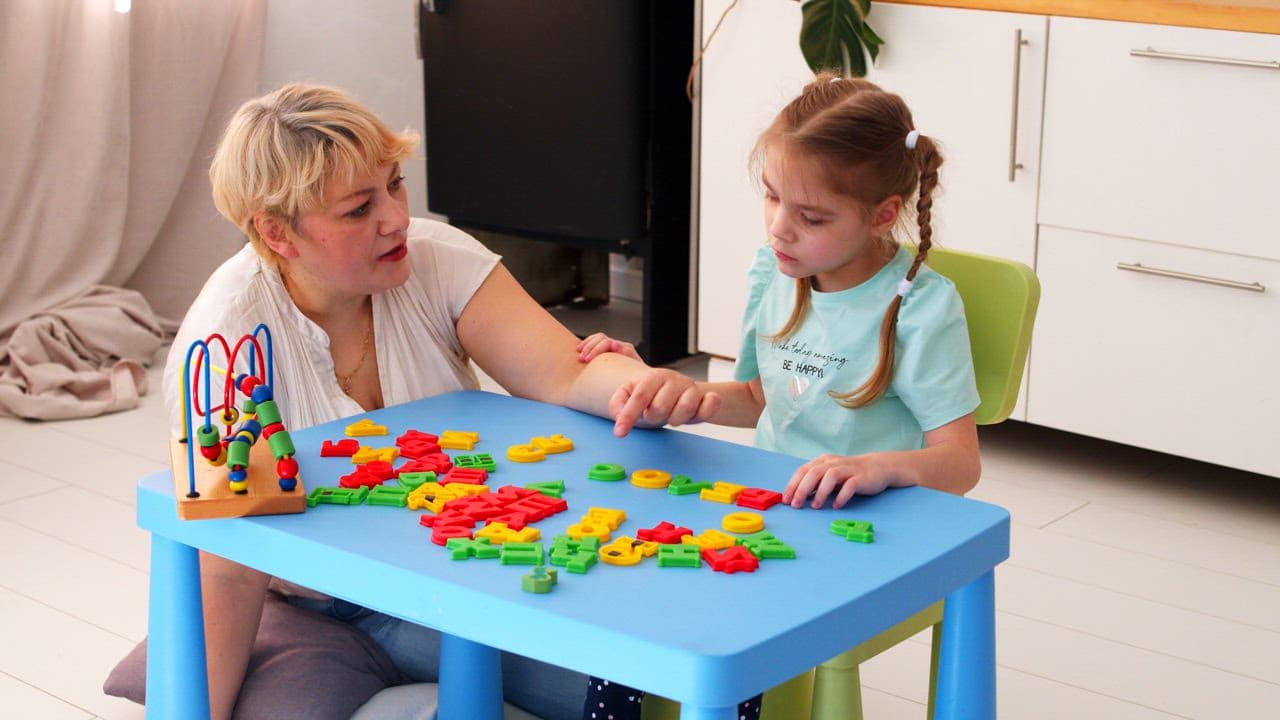
Speech therapy helps kids communicate: understanding what they hear, finding their words, putting sentences together, being understood by the people around them, and building the social side of conversation. It also covers feeding and swallowing, because the same muscles and skills are involved at the table.
A pediatric speech-language pathologist (SLP) is a licensed, master’s-level clinician who evaluates where your child is today and works with them, and with you, through play and everyday routines. At Origin, sessions happen in your home, where kids are most comfortable and new skills get practiced in the places they’ll actually be used: the living-room floor, the kitchen table, storytime.
When to check in
Signs your child might benefit
Every child develops at their own pace, and one item on this list is not a diagnosis. But if any of these sound familiar, an evaluation with a pediatric SLP is a low-stakes way to get a clear answer.
01Late talkers and first words12 to 24 mo
Most babies babble by around 9 months and start using first words around their first birthday, and many toddlers begin joining two words ("more milk", "daddy go") by around age 2. If your toddler isn’t using words by around 15 to 18 months, has noticeably fewer words than other kids their age, or isn’t combining words by age 2, it’s worth checking in.
02Hard-to-understand speech2 to 4 yrs
It’s normal for little kids to simplify sounds. As a rough guide, familiar adults typically understand about half of what a 2-year-old says and most of what a 3-year-old says. If people outside the family regularly can’t understand your 3- or 4-year-old, or your child gets frustrated trying to be understood, a speech evaluation can help.
03Understanding language and following directions2 to 3 yrs
Some kids talk plenty but struggle to take language in: following simple directions ("get your shoes"), pointing to pictures in a book when asked, or answering simple questions by around age 2 to 3. Trouble understanding is easy to miss because it can look like ignoring. An SLP can tell the difference.
04Stuttering2 to 5 yrs
Lots of kids repeat sounds and words somewhere between ages 2 and 5 while their language grows quickly, and for many it passes on its own. It’s worth an evaluation when the stuttering sticks around for more than about six months, comes with visible tension or frustration, or your child starts avoiding talking.
05Feeding and swallowingAny age
SLPs also work on mealtimes: frequent coughing, gagging, or choking while eating or drinking, a very limited list of accepted foods, difficulty moving from purees to solids, or mealtimes that regularly end in tears, for your child or for you.
06Social communicationAny age
Communication is more than words: taking turns in conversation, using gestures like pointing and waving, responding to their name, and joining other kids in play. If connecting with others seems hard for your child, a speech evaluation looks at the whole picture of how they communicate.
Not sure which of these fits? You don’t have to know. Describe what you’re seeing in the form and we’ll take it from there. Get matched →
You know your child best. We help you get a clear answer.
The first visit
What a speech evaluation looks like
The first visit is an evaluation, in your home, usually about an hour. To your child, most of it looks like playing.

- 1
Your therapist gets to know your child
Play, books, snacks, whatever fits your child’s age, while your SLP listens to how your child communicates and watches how they understand, interact, and (for feeding concerns) eat.
- 2
A closer look at specific skills
Depending on your concerns, your SLP uses structured activities and standardized measures to look at speech sounds, understanding, expression, social communication, or feeding, and asks you about routines, history, and what you’re seeing day to day.
- 3
A plan, explained in plain English
You get a clear picture of where your child is, whether therapy is recommended, and what the goals would be. If ongoing sessions make sense, they happen on a regular schedule in your home, and you learn ways to build practice into everyday moments.
Real clinicians
Your therapist is a real person, already nearby
Licensed pediatric SLPs running their own practices with Origin, matched to your child by a real care coordinator.
Rachel LeeSpeech-Language Pathologist
Melissa EichSpeech-Language Pathologist
Kimberli NgSpeech-Language Pathologist
Karlene LibraroSpeech-Language Pathologist
And more join every month. Who you see here refreshes from our live network.
Insurance
Covered for most families
Plans our therapists hold in-network, by state. We confirm your specific coverage before anything is booked.
Virginia







- + 3 more plans
Illinois


- + 4 more plans
Speech and occupational therapy often go together
Kids don’t come in single categories. Feeding challenges often have both a speech side (chewing, swallowing) and a sensory side (textures, new foods): SLP and OT territory, respectively. And skills like attention and self-regulation, which occupational therapists work on, are the foundation communication is built on.
When a child needs both, Origin builds one care team: therapists who coordinate with each other, sessions that happen in the same familiar place (your home), and one point of contact for you.
Where we serve
In-home speech therapy, where you live
Questions
Common questions about speech therapy
Do we need a diagnosis or a referral first?
You don't need to wait for a diagnosis to reach out. An evaluation is how you get clarity. Some insurance plans do ask for a physician referral; we check what your plan requires and walk you through it before anything is booked.
Will insurance cover it?
Care is covered by insurance for most families. We're in-network with many major plans, and we confirm your specific coverage and explain any costs before anything is booked.
How fast will we hear back?
Families hear from us with a therapist offer in a median of about 1 day after completing the form.
Will my child just grow out of it?
Some kids do catch up on their own, and an evaluation is how you find out, instead of waiting and wondering. Your SLP will tell you honestly whether therapy is recommended, whether monitoring makes sense, or whether everything looks on track.
What ages do you work with?
Our speech-language pathologists work with children across ages and stages, from babies and toddlers through school-age kids and teens. Tell us about your child in the form and we’ll match you with a therapist who fits.
Where do sessions happen?
In your home, at times that work for your family’s schedule. Our therapists serve families in and around Northern Virginia, Richmond, Virginia Beach, and Chicagoland.
An evaluation replaces worry with a plan.
Tell us about your child in a couple of minutes. A real Origin care coordinator reviews every match.