
Physical Therapy · In your home
Strong, steady, ready to play.
In-home pediatric physical therapy from licensed PTs who come to you. Covered by insurance for most families.
The basics
What is pediatric physical therapy?
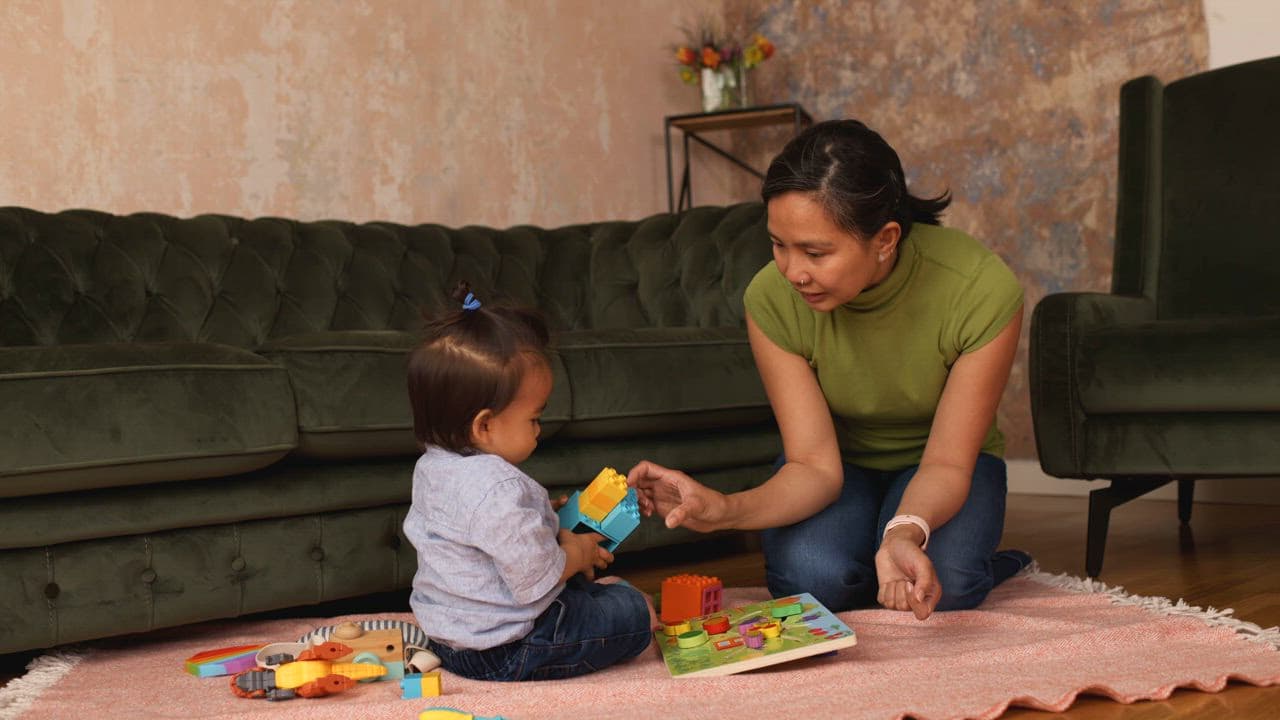
Physical therapy is about how kids move: rolling, sitting, crawling, walking, climbing, running, jumping, and the strength, balance, and coordination underneath all of it. Pediatric PT looks nothing like adult PT; it’s movement practice built into play a child actually wants to do.
A pediatric physical therapist (PT) is a licensed clinician who evaluates how your child moves and builds a plan to help them move more easily, safely, and confidently. At Origin, sessions happen in your home, on the stairs your child actually climbs and the floors they actually play on, with your everyday routines as the practice ground.
When to check in
Signs your child might benefit
Every child develops at their own pace, and one item on this list is not a diagnosis. But if any of these sound familiar, an evaluation with a pediatric PT is a low-stakes way to get a clear answer.
01Movement milestones coming late6 to 18 mo
As a rough guide, many babies roll over by around 6 months, sit steadily by around 9 months, and take first steps somewhere between 12 and 18 months. If your baby is well past those windows, strongly favors one side, or skipped patterns like crawling and seems wobbly, it’s worth checking in with a pediatric PT.
02A head tilt or flat spot (torticollis)0 to 12 mo
Some babies develop tight neck muscles that make them prefer looking one way, often with a flat spot on one side of the head. It’s common, and earlier attention makes it easier to address. If you notice a consistent tilt or turn preference in the first months, ask about an evaluation.
03Seeming floppy, or tiring quicklyAny age
Low muscle tone can look like a baby who feels loose to hold, a toddler who leans on everything, or a preschooler who asks to be carried long before peers would. If your child fatigues noticeably faster than other kids their age, PT can build strength through play.
04Frequent tripping and falling2+ yrs
All toddlers fall, constantly. It’s worth a look when the falling doesn’t taper off as they grow, when your child seems markedly less steady than same-age friends, or when they avoid uneven ground, stairs, or playground equipment because of it.
05Walking on tiptoes2+ yrs
Brand-new walkers often go up on their toes. When toe walking persists past around age 2, happens most of the time, or comes with tight calves or stumbling, a PT evaluation can sort out why and what to do about it.
06Trouble keeping up at play3+ yrs
Running, jumping, catching, climbing. If your child sits out at the playground, struggles with stairs long after peers manage them, or can’t keep up with kids their age, PT works on the strength and coordination that make play feel good again.
Not sure which of these fits? You don’t have to know. Describe what you’re seeing in the form and we’ll take it from there. Get matched →

You know your child best. We help you get a clear answer.
The first visit
What a PT evaluation looks like
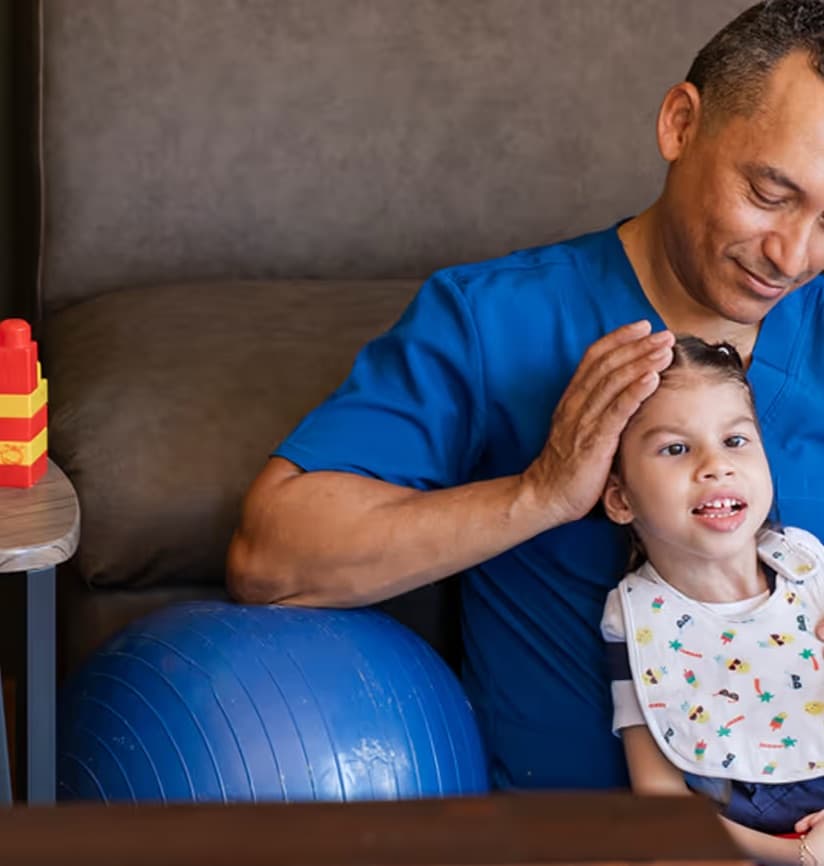
The first visit is an evaluation, in your home, usually about an hour. To your child, most of it looks like playing.
- 1
Your therapist gets to know your child
Rolling, crawling, walking, climbing, chasing bubbles, while your PT watches how your child moves through real play, in the space where they move every day.
- 2
A closer look at specific skills
Depending on your concerns, your PT uses structured activities and standardized measures to look at strength, balance, range of motion, and movement patterns, and asks about your child’s history and what you’re seeing day to day.
- 3
A plan, explained in plain English
You get a clear picture of where your child is, whether therapy is recommended, and what the goals would be. If ongoing sessions make sense, they happen on a regular schedule in your home, with simple ways to fold practice into daily routines.
Real clinicians
Your therapist is a real person, already nearby
Licensed pediatric PTs running their own practices with Origin, matched to your child by a real care coordinator.
Emily RibaricPhysical Therapist
Madison KuPhysical Therapist
Quincy RayPhysical Therapist
Rebecca ArvanitisPhysical Therapist
And more join every month. Who you see here refreshes from our live network.
Insurance
Covered for most families
Plans our therapists hold in-network, by state. We confirm your specific coverage before anything is booked.
Virginia







- + 3 more plans
Illinois


- + 4 more plans
PT and OT often go together
Big movements and small ones develop hand in hand. Physical therapists build the strength, balance, and gross motor foundation; occupational therapists build on it with fine motor skills, coordination, and daily routines. Kids working on how they move often benefit from both.
When a child needs more than one discipline, Origin builds one care team: therapists who coordinate with each other, sessions in the same familiar place (your home), and one point of contact for you.
Where we serve
In-home physical therapy, where you live
Questions
Common questions about physical therapy
Do we need a diagnosis or a referral first?
You don't need to wait for a diagnosis to reach out. An evaluation is how you get clarity. Some insurance plans do ask for a physician referral; we check what your plan requires and walk you through it before anything is booked.
Will insurance cover it?
Care is covered by insurance for most families. We're in-network with many major plans, and we confirm your specific coverage and explain any costs before anything is booked.
How fast will we hear back?
Families hear from us with a therapist offer in a median of about 1 day after completing the form.
My pediatrician said "wait and see." Should we?
That’s a common and often reasonable answer, and if the question is still nagging at you, an evaluation is a low-stakes way to replace worry with information. Your PT will tell you honestly whether therapy is recommended, whether monitoring makes sense, or whether everything looks on track.
What ages do you work with?
Our physical therapists work with children across ages and stages, from babies and toddlers through school-age kids and teens. Tell us about your child in the form and we’ll match you with a therapist who fits.
Where do sessions happen?
In your home, at times that work for your family’s schedule. Tell us where you are in the form and we’ll match you with a therapist who covers your area.
An evaluation replaces worry with a plan.
Tell us about your child in a couple of minutes. A real Origin care coordinator reviews every match.