
Occupational Therapy · In your home
Everyday routines, made easier.
In-home pediatric occupational therapy from licensed OTs who come to you. Covered by insurance for most families.

The basics
What is pediatric occupational therapy?
A child’s "occupation" is everyday life: playing, getting dressed, eating with the family, holding a crayon, managing big feelings, making it through a school day. Pediatric occupational therapy builds the skills underneath all of that: fine motor control, sensory processing, coordination, attention, and self-care routines.
A pediatric occupational therapist (OT) is a licensed clinician who evaluates how your child takes in the world and gets things done, then works with them through play to build up the skills that are holding those routines back. At Origin, OT happens in your home, which for occupational therapy is a real advantage, because the routines that are hard (mealtime, getting dressed, homework) are practiced exactly where they happen.
When to check in
Signs your child might benefit
Every child develops at their own pace, and one item on this list is not a diagnosis. But if any of these sound familiar, an evaluation with a pediatric OT is a low-stakes way to get a clear answer.
01Sensory sensitivitiesAny age
Big reactions to sounds, textures, clothing tags, grooming, or busy places, or the opposite: constantly seeking crashing, spinning, and squeezing. If your child’s reactions to everyday sensations regularly derail meals, getting dressed, or outings, an OT can help you understand what’s happening and what helps.
02Big feelings and self-regulation2+ yrs
All toddlers melt down. It’s worth checking in when the meltdowns are much bigger, longer, or more frequent than other kids the same age, when transitions reliably trigger them, or when your child has a very hard time calming back down, especially past the toddler years.
03Fine motor skills and handwriting1 to 6 yrs
Hands do a lot of growing up: holding a spoon as a toddler, using scissors and drawing simple shapes in preschool, managing buttons and zippers by around age 5, and handwriting at school age. If your child avoids drawing and crafts, switches hands to avoid effort, or is far behind classmates with a pencil, an OT evaluation can pinpoint why.
04Everyday self-care2 to 6 yrs
Getting dressed, feeding themselves, brushing teeth, bath time, toilet routines: skills that build gradually through the preschool years. When they stall well past when peers manage them, or every routine turns into a battle, OT works on the underlying skills and on the routine itself.
05Picky eating beyond the normAny age
Many kids have preferences; some kids eat only a handful of foods, gag at new textures, or can’t sit through a family meal. OTs work on the sensory and motor side of eating, often alongside a speech therapist when chewing and swallowing are involved.
06Attention, focus, and coordinationAny age
Trouble sitting for a story or a meal, flitting between activities, bumping into things, or looking clumsy next to peers. Struggles with attention and coordination often travel together, and an OT evaluation looks at the sensory and motor foundations underneath both.
Not sure which of these fits? You don’t have to know. Describe what you’re seeing in the form and we’ll take it from there. Get matched →

You know your child best. We help you get a clear answer.
The first visit
What an OT evaluation looks like
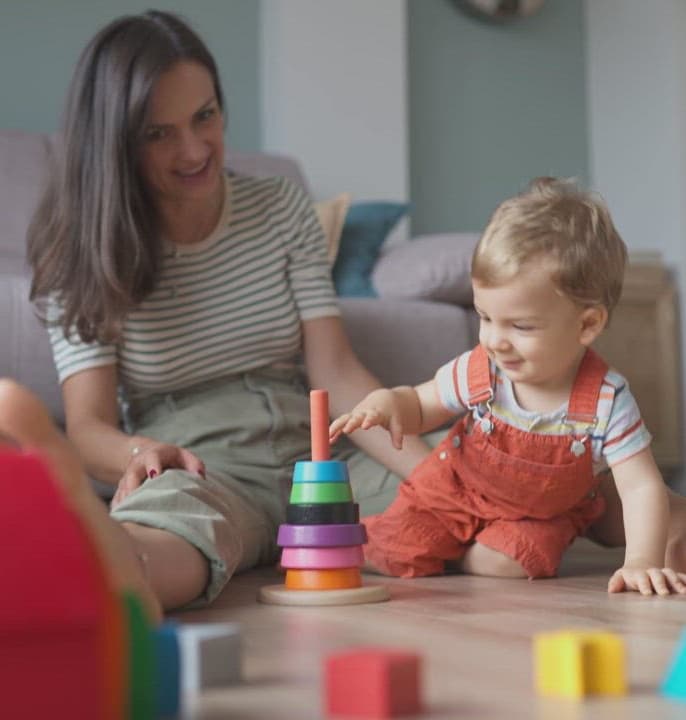
The first visit is an evaluation, in your home, usually about an hour. To your child, most of it looks like playing.
- 1
Your therapist gets to know your child
Games, puzzles, drawing, movement: your OT watches how your child uses their hands, moves their body, handles sensory input, and sticks with an activity.
- 2
A closer look at specific skills
Depending on your concerns, your OT uses structured activities and standardized measures to look at fine motor skills, sensory processing, coordination, and daily routines, and asks you what home life actually looks like, because you’re the expert on that.
- 3
A plan, explained in plain English
You get a clear picture of where your child is, whether therapy is recommended, and what the goals would be. If ongoing sessions make sense, they happen on a regular schedule in your home, woven into the real routines you want to get easier.
Real clinicians
Your therapist is a real person, already nearby
Licensed pediatric OTs running their own practices with Origin, matched to your child by a real care coordinator.
Kayla LangOccupational Therapist
Lindsay JonesOccupational Therapist
Natalia Camacho CubillosOccupational Therapist
Rhonda ColemanOccupational Therapist
And more join every month. Who you see here refreshes from our live network.
Insurance
Covered for most families
Plans our therapists hold in-network, by state. We confirm your specific coverage before anything is booked.
Virginia







- + 3 more plans
Illinois


- + 4 more plans
OT often pairs with speech or physical therapy
Feeding is the classic overlap: the sensory side of trying new foods is OT territory, while chewing and swallowing mechanics belong to speech therapy, so many kids benefit from both. Motor skills overlap the other direction: OTs work on fine motor and daily routines while physical therapists build the strength and big movements underneath them.
When a child needs more than one discipline, Origin builds one care team: therapists who coordinate with each other, sessions in the same familiar place (your home), and one point of contact for you.
Where we serve
In-home occupational therapy, where you live
Questions
Common questions about occupational therapy
Do we need a diagnosis or a referral first?
You don't need to wait for a diagnosis to reach out. An evaluation is how you get clarity. Some insurance plans do ask for a physician referral; we check what your plan requires and walk you through it before anything is booked.
Will insurance cover it?
Care is covered by insurance for most families. We're in-network with many major plans, and we confirm your specific coverage and explain any costs before anything is booked.
How fast will we hear back?
Families hear from us with a therapist offer in a median of about 1 day after completing the form.
Is OT only for kids with a diagnosis like autism or ADHD?
No. Occupational therapists work with many kids who have a diagnosis, and many who don’t. If everyday routines are consistently hard for your child, that’s reason enough to have an evaluation; no label is required to start.
What ages do you work with?
Our occupational therapists work with children across ages and stages, from toddlers through school-age kids and teens. Tell us about your child in the form and we’ll match you with a therapist who fits.
Where do sessions happen?
In your home, at times that work for your family’s schedule. Our therapists serve families in and around Northern Virginia, Richmond, Virginia Beach, and Chicagoland.
An evaluation replaces worry with a plan.
Tell us about your child in a couple of minutes. A real Origin care coordinator reviews every match.